

GAZOO Racing South Africa has pulled the covers off the Hilux DKR Alpha, a ground-up rally-raid challenger that will campaign the 2027 Dakar Rally and the FIA World Rally-Raid Championship in the Ultimate class, alongside the South African Rally-Raid Championship on home soil.The vehicle is the first of a new generation of Dakar machines and is the handiwork of Shameer Variawa Racing, the Kyalami-based operation that runs GRSA's motorsport programme. Its name carries both history and intent: DKR honours the Dakar pedigree the Hilux has built over the years, while Alpha marks the start of something new.
This is no evolution of an existing platform. Where the GR Hilux IMT EVO refined a package developed over several seasons, the DKR Alpha began with a blank sheet, its layout and dynamics reconceived from first principles. It brings an all-new electronic architecture, fresh suspension components and a new damping partner, together with an FIA-approved seat attenuation system designed in-house by SVR. Power comes from a twin-turbo V6 derived from the 3.5-litre V35A petrol engine used in the Land Cruiser 300, a direct link between the showroom floor and the Dakar stages.
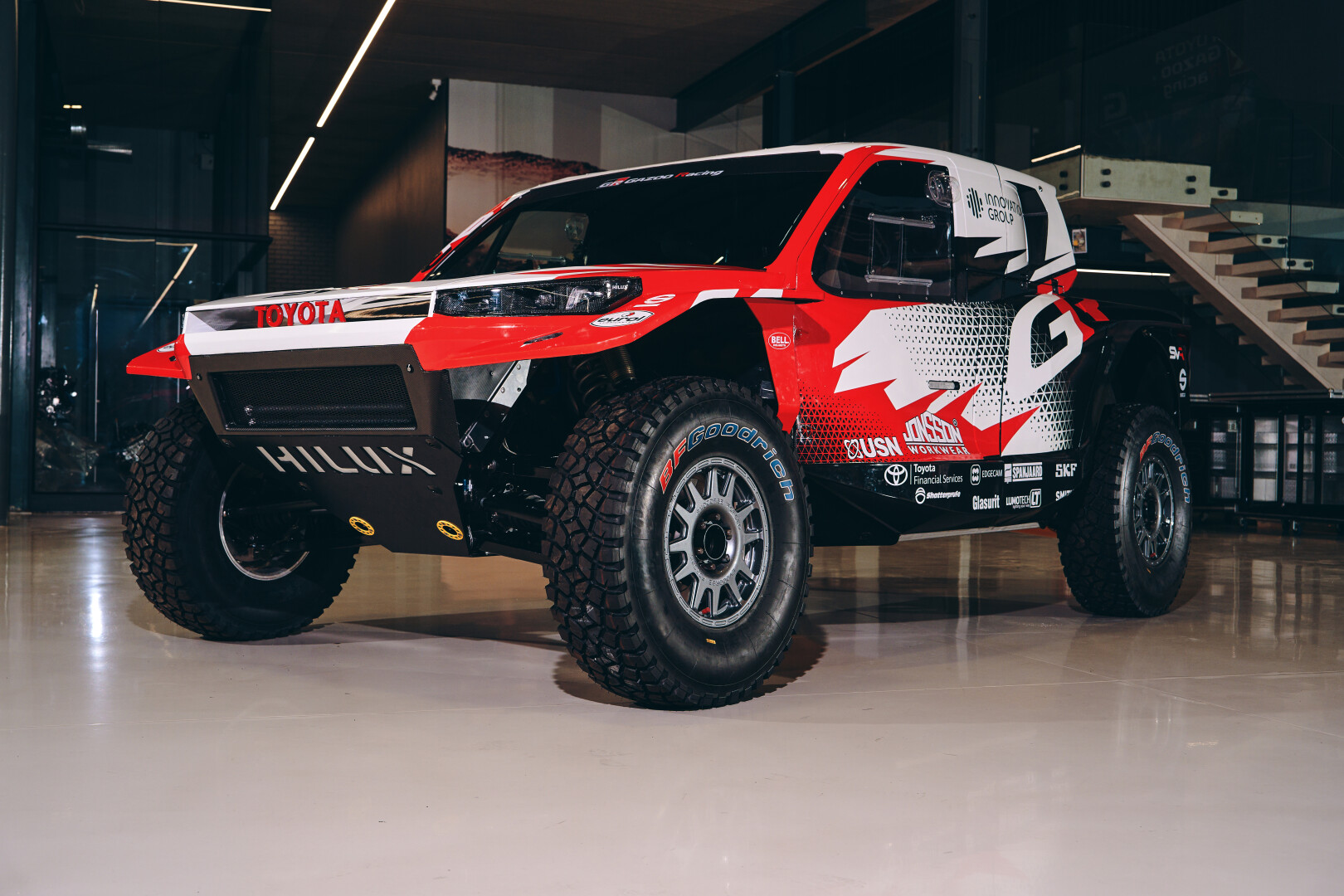
The detail work runs deep. Aerodynamics and component packaging have been reworked, the drivetrain layout and weight distribution optimised, and approach angles and driver visibility improved, all with structural robustness and reliability front of mind, the traits on which the Hilux's reputation rests. A young SVR design team led the project, backed by more than a decade of experience the programme has gathered at the highest level of the sport.
The new car arrives with a hefty legacy behind it. South African-built Hilux machines have won the Dakar Rally outright three times, in 2019, 2022 and 2023. Locally, GRSA claimed the 2025 South African Rally-Raid Championship and, earlier this month, sealed the 2026 overall and Ultimate FIA T1+ titles after the GR Hilux IMT EVO swept every round of the season.
The 2027 Dakar Rally, the 49th running of the event, takes place from 9 to 23 January and spans 7,824 kilometres over 12 stages from Portugal to Morocco, including 4,341 kilometres of timed stages through unforgiving desert terrain. It will serve as the first major examination of the Hilux DKR Alpha.
SVR is under no illusion about the scale of the task. Taking an entirely new car to Dakar for its first major event is a deliberate strategy: lay the right technical foundation now, then develop the car as quickly and intelligently as possible. The platform has been designed with several open development paths, so the car that lines up in January will mark the beginning of its journey rather than the finished article.
Glenn Crompton, Vice President of Marketing at Toyota South Africa Motors, said the Hilux had proven itself in the toughest events on earth for more than a decade, and that every lesson learnt had made it a better vehicle for customers. He said kaizen, or continuous improvement, sat at the heart of everything the company did, and that the self-reliance built with SVR, which designs, builds and develops these cars in South Africa, allowed the company to apply it faster than ever. Crompton described the Hilux DKR Alpha as the next chapter in that story: a clean-sheet car, built in South Africa, that takes the quality, durability and reliability customers expect from a Hilux and pushes them further than before. He called it a proud moment for everyone at Toyota South Africa Motors and across the programme.
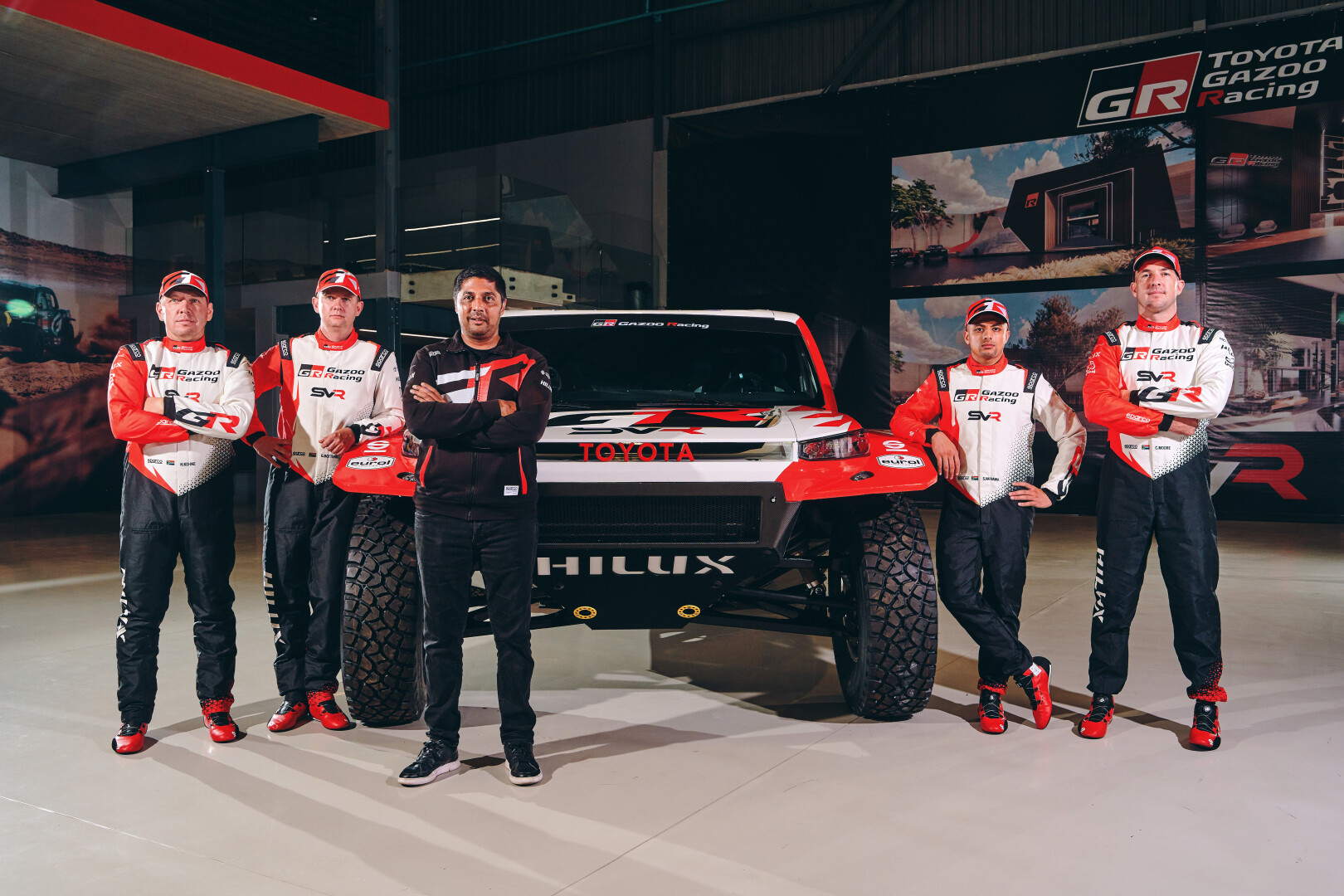
GAZOO Racing TOYOTA will contest two demanding categories at the 2027 Dakar Rally, combining innovative technology with a one-team approach for the 49th edition of the legendary event.
The Toyota Hilux will fly the flag in the Ultimate class, with competition versions based on the ninth generation of the bakkie and developed to withstand the extreme forces of flat-out off-road driving. They ride on lightweight tubular chassis and feature dedicated suspension, dampers and brakes strengthened for reliability and performance in harsh conditions, with power and efficiency delivered by engines based on the 3.5-litre V6 twin-turbo petrol V35A powerplant.
An exciting blend of youth and experience brings proven Dakar performance, a will to win and strong team spirit to the driver and navigator line-up. The crews will compete in Portugal and Morocco as part of a one-team approach that sees GAZOO Racing Europe and GAZOO Racing South Africa combine their strengths into a formidable GAZOO Racing TOYOTA line-up.
Guy Botterill, the newly crowned 2026 South African Rally-Raid champion, was rookie of the year on his Dakar debut in 2024 when he finished sixth overall. He has won multiple national titles at home alongside countryman Henry Köhne, who will partner him on the Dakar Rally for the first time in 2027.
South Africans Henk Lategan and Brett Cummings are multiple national champions and a force on the global stage. They finished second on the 2025 Dakar Rally and won the South African round of the W2RC in the same season.
Japanese driver Akira Miura is a five-time winner of the Stock category at the wheel of a Toyota Land Cruiser, while Spaniard Armand Monleón is an experienced navigator with 11 Dakar Rally appearances to his name. The pair have made strong progress in their first W2RC season together in 2026.
American duo Seth Quintero and navigator Andrew Short have two W2RC victories in 2026 and multiple Dakar stage wins, firmly establishing themselves as front-runners. They will chase a first overall Dakar podium to add to Quintero's second place in the T3 category in 2023.
At just 21, Saood Variawa, the 2025 South African Rally-Raid champion, made history as the youngest-ever Dakar stage winner during only his second appearance in 2025. In his fourth Dakar Rally he will be joined by a new navigator, fellow South African and former motorcycle competitor Charan Moore.
Toyota will also combine hydrogen and fuel cell technology in motorsport when it enters the DKR GR FC Hilux, with the aim of winning the Dakar Future Mission 1000 category for experimental vehicles and new technologies. A short, intense development programme involved close cooperation between Toyota's European R&D centre, Overdrive Racing, TOYOTA RACING GmbH in Cologne and Toyota's Hydrogen Factory in Japan.
Built on the same platform as the Ultimate class Hilux, using the same tubular frame, safety cell, suspension and brakes, the DKR GR FC Hilux features a high-powered fuel cell made up of two mass-production fuel cell stacks combined into one system. Onboard gaseous hydrogen storage uses the same tanks as the Toyota Mirai. A dedicated e-axle, an IAV Dragoon ECU and a new electronics system have been selected, while innovations such as natural fibre panels replacing some carbon fibre parts and a new high-voltage cooling system have been introduced.
Saudi Arabian driver Dania Akeel will drive the DKR GR FC Hilux alongside Frenchman Sébastien Delaunay, competing together on the Dakar Rally for the second time. In her first Dakar in 2022, Akeel earned a top-10 finish in the T3 class and, in 2025, won a stage in the Challenger class. She is also a two-time winner of the FIA Middle East Baja Cup.
Colin Windell for Colin-on-Cars in association with
proudly ALL THINGS MOTORING

