


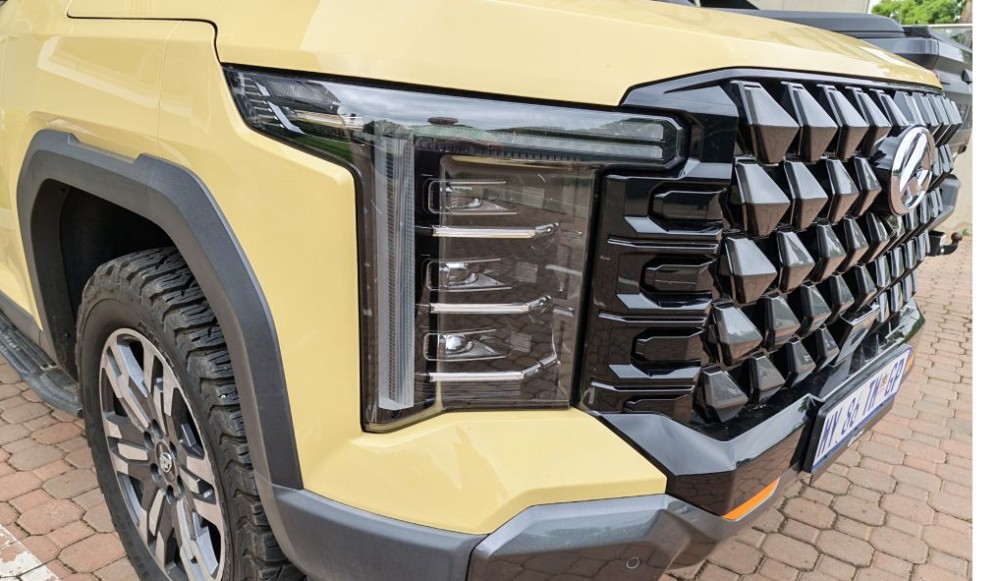
Recent news reports, blogs, TikToks or whatever regarding the uprated payload of the Jetour T and T2 models and the ripple-roof have elicited a wide range of comment, insult and opinion – mostly without any direct input from Jetour itself.
Jetour South Africa's head of product says the original 300 kg rating for the T1 and T2 SUVs stemmed from a difference in how vehicle mass is measured. A regulator meeting is expected to settle the T1 approval.
Jetour South Africa has blamed a mismatch between international and local measurement standards for the low payload ratings that dogged its T1 and T2 SUVs. It says the paperwork for the T1's higher rating should be completed once a meeting with the National Regulator for Compulsory Specifications (NRCS) takes place.

Find the right Jetour for your needs - browse here
Speaking exclusively to CHANGECARS, head of product Rowen Naidoo said the problem began when the two models were introduced in 2025. Jetour's head office works from the mass in running order (MIRO), a global measure that includes a 75 kg driver. South Africa uses kerb mass, which excludes the driver. Because the wrong minimum masses were applied during homologation, the licence figure, calculated as gross vehicle mass less kerb mass, came to 300 kg instead of 375 kg.
The company says it used the correction to go further. Naidoo said Jetour weighed local consumer needs and competitor offerings and settled on 475 kg, which he said leaves room for accessories, long-distance trips and outdoor use. The 375 kg figure, he explained, would only have met the minimum requirement, which assumes 68 kg per occupant plus 7 kg of luggage, or 75 kg for each of five seats. Head office had used the European minimum when it first supplied figures.
To support the higher rating, Jetour asked its head office to commission fresh brake tests at a payload 100 kg higher. It also carried out new weighing at a facility in Clayville and obtained updated documents from TÜV. The company then applied to the NRCS for both models. The T2 was prioritised and approved first. Naidoo said the T1 was within a day or so of completion when the regulator paused the process and asked for more documentation. Getting that from head office and its engineers, and securing diary time with a regulator that serves several manufacturers, took longer than Jetour expected.
“We will meet the NRCS's general manager for automotive to finalise the T1 submission. Once the application is captured new approval numbers would be issued reflecting the 475 kg rating.”
Asked how payload could rise without any mechanical change, he said all manufacturers rely on independent testing under European rules, which South Africa follows. Brake tests are run across a wide band of masses from roughly 250 kg to more than 600 kg, and each manufacturer chooses the figure it wants to use.
“The original reports covered only 375 kg because that was all Jetour requested,” he said, “but the components had already been tested well beyond it. A higher payload puts more stress on a vehicle and can shorten its life so the company chose a figure it considered a balance between usefulness and durability. Jetour backs its engines with a 10-year, one-million-kilometre warranty.”
The explanation follows months of public scrutiny. Jetour announced in August the approved payload for the relevant T1 and T2 models had risen from 300 kg to 475 kg, after a viral social media post in mid-2026 questioned the safety of the vehicle's limited load capacity.

Your dream car – make it happen with the best finance deal
The Automobile Association (AA) later said weighbridge tests witnessed by it and the NRCS at Clayville produced payload figures between 455 kg and 538 kg across five derivatives, with one T2 variant falling short of 475 kg. Jetour disputed the figure, saying the same derivative measured 479 kg. The AA also reported that the NRCS confirmed the T1 application was still being processed, which it said meant the original rating still applied to those vehicles.
At the same interview, service manager Nigel Padiachi was questioned about a separate matter: a T1 whose owner reported rippling in the roof panels. The Motor Industry Ombudsman of South Africa (Miosa) first ruled in Jetour's favour, then found for the customer after he challenged the outcome. Jetour has since bought the vehicle back.
He said Jetour South Africa chose to buy the car back while Miosa's assessment was still pending, in the interest of customer satisfaction and the company had met the owner to try to settle the matter earlier, without success – and that an assessor arranged by the dealer had found no product defect.
“Now that the vehicle is back in its hands,” he said, “Jetour will inspect it more closely.”
He described the case as the only one of its kind worldwide and said vehicles operating in the Middle East and South America had reported no such problem.
Colin Windell for Colin-on-Cars in association with
proudly ALL THINGS MOTORING

