

GQEBERHA – The ISUZU D-MAX is one of South Africa’s most trusted and reliable bakkies. For 2026, ISUZU Motors South Africa is raising the bar with improved performance and efficiency from the D-MAX’s renowned 1.9 Ddi engine, introducing even bolder styling, adding numerous feature enhancements across the line-up, and bolstering the range with six new models.
“We are building on the D-MAX’s proven reputation for exceptional efficiency, durability and reliability with a comprehensive range of mid-cycle upgrades that enhance the all-round capability, style, comfort and safety offered to our customers,” says Kevin Fouché, Department Executive, Product Planning, ISUZU Motors South Africa.
“One of the main changes is the adoption of the latest-generation 1.9 Ddi engine, which has been further developed for improved throttle response and low-down torque, matched to enhanced efficiency, reduced emissions and better cold-start performance,” Fouché says.
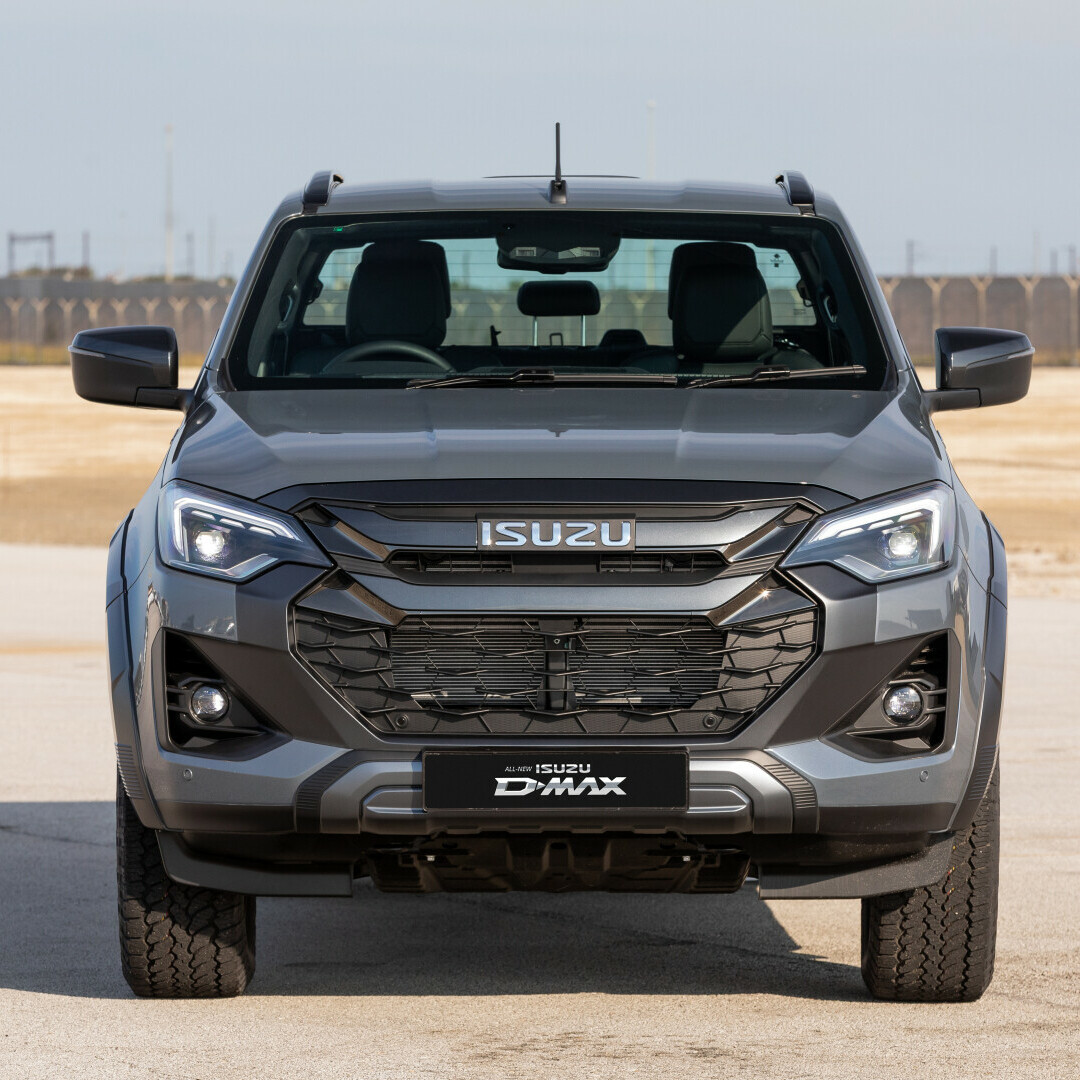
At the same time, the design of the D-MAX has been updated with a bold new look that is more modern and dynamic, while also improving aerodynamics and refinement. The latest model is based on the seventh-generation D-MAX that debuted in 2022 and is produced at the ISUZU Motors South Africa plant in Struandale, Gqeberha.
Numerous comfort, convenience and safety feature upgrades have been implemented across the range, including a new Rough Terrain Mode that is standard on all 4x4 derivatives. It works in conjunction with the advanced Traction Control System to provide greater off-road capability for conquering the toughest conditions.
“We have expanded the line-up with six new derivatives that have been strategically developed to meet the requirements of a wide range of owners and applications,” Fouché says. “This includes a new entry-level Low-Ride Base Single Cab, three new Extended Cab models that provide a greater choice of 4x4 and automatic variants, plus the Double Cab X-Rider series that is now also offered with the 3.0 Ddi engine in 4x2 and 4x4.
“The updated and expanded range, which now comprises 33 models across the Single Cab, Extended Cab and Double Cab body styles, makes the D-MAX an even more capable, competitive and compelling choice, whether for work or play, and everything in between,” Fouché says.
Latest-generation 1.9 Ddi engine
At the heart of 23 models in the 2026 D-MAX range is the latest version of ISUZU’s 1.9-litre Ddi engine that is valued and trusted for its fuel economy, low running costs and durability.
The punchy yet frugal RZ4E engine benefits from an upgraded turbocharger that now uses an electronically controlled actuator for faster response compared to the previous vacuum actuator.
Fuel delivery is improved through the adoption of a new high-pressure fuel pump and high-pressure common rail injection system, which receives the fuel rail pressure sensor found on the 3.0 Ddi engine – all of which enhances combustion efficiency. The combustion chamber has also been redesigned for superior performance and lower emissions, complemented by a new ECM calibration that records more data sets for enhanced engine control.
Although the peak outputs of 110kW and 350Nm remain unchanged, the uprated 1.9 Ddi engine now delivers an additional 130Nm of torque at 1 600 r/min compared to the previous unit. The full 350Nm torque output is available from 1 600 to 2 600 r/min, significantly bolstering low-down torque delivery for improved performance and acceleration.
Engine cold start operation has also been optimised with the change from metal to ceramic glow plugs that heat up faster and further reduce emissions.
The range-topping 3.0 Ddi engine is available on 10 models within the expanded 2026 D-MAX range, including now on the Double Cab X-Rider series. It remains unchanged, producing 140kW and 450Nm of torque from 1 600 to 2 600 r/min.
Greater 4x4 capability
Bolstering the already impressive off-road credentials of the D-MAX, 4x4 models across the range are now equipped with a new Rough Terrain Mode that increases the effectiveness of the standard Traction Control System (TCS) in all off-road driving scenarios.
Activated by a button on the gearshift console, Rough Terrain Mode limits the torque to any spinning wheels through stronger application of the brakes on that wheel, in combination with more aggressive throttle control. This effectively directs driving power to the individual wheels with more traction. It can also distribute more power from the front to the rear axle if required, thereby assisting the vehicle in gaining traction and proceeding safely.
With Rough Terrain Mode activated, engine and brake control are available in two-wheel drive (2H), four-wheel drive high-range (4H) and low-range (4L). Additionally, Rough Terrain Mode enables the use of TCS when the differential lock is engaged, further improving off-road capability in rough terrain. Both of these enhancements are significant benefits over most competitors in this segment, and when compared to the outgoing models.
Modern design philosophy
The design of the seventh-generation D-MAX has been refreshed for 2026, giving it a more sophisticated and purposeful appearance. The philosophy is built around ISUZU’s ‘Hexa Pod’ concept, which focuses on a clean and strong design that feels both modern and comfortable. The striking styling is complemented by a new digital texture, known as the ‘Miura-ori’ pattern, which is featured on the high-series models, adding a modern, innovative and visually distinctive touch.
One of the most noticeable changes from the previous model is the futuristic new headlight design, which reinforces the purposeful and rugged stance of the D-MAX. Equipped as standard on LS models and up, the LED daytime running lights with integrated turn indicators are now located above the LED headlamps, in place of the underslung DRLs used previously.
In the interests of improved safety, the low and high-beam performance of the redesigned LED headlamps on the high-series models, as well as the redesigned halogen headlamps on the Base and L series, have been optimised for increased illumination and driving safety.
The front facia of the D-MAX has been modernised, featuring new triangular fog light bezels that add dynamic flair and offer functional benefits too. Incorporated within the bezel is an air curtain that channels airflow from the front bumper to exit out the wheel well, then pass down the side of the vehicle. The smooth, uninterrupted passage of air reduces aerodynamic drag, suppresses turbulence and noise, and improves overall performance and efficiency.
Less obvious but equally noteworthy are the new front skid plate and bumper side skirts, which further enhance aerodynamic performance and reduce road noise for increased cabin comfort and refinement.
A new sculpted bonnet reinforces the muscular theme of the refreshed design, with an eye-catching centre power bulge that underscores the D-MAX's tall, wide and powerful stance.
The modernisation continues at the rear of the vehicle, with the high-spec models (LS, LSE, X-Rider, V-CROSS and Arctic) gaining all-new tail light clusters. The bold three-step LED combination lamps lend a more upmarket feel to the design and accentuate the wide, tough appearance of the D-MAX.
The tailgate has also been redesigned, incorporating a larger upper spoiler that improves aerodynamics for reduced wind noise, and gives it a sportier appearance. More pronounced horizontal lines add to the assertive presence.
Other subtle but intentional refinements include a more dynamic script for the badging, which has been repositioned and aligned to accentuate the horizontal lines that define the new tailgate.
New models, more features
Base and L
The D-MAX Single Cab is now available in seven variants in Base and L trim levels. The range starts with the new 1.9 Ddi Low Ride Base model – a value-oriented offering that is ideally suited to workhorse commercial applications where efficiency, low running costs and reliability are the priority. The High Ride Base model continues in the line-up, with the benefit of increased ground clearance.
The higher specification L series is available in four 1.9 Ddi Single Cab models, with the option of 4x2 and 4x4, as well as six-speed manual and automatic gearboxes. The range is topped off with the 3.0 Ddi 4x4 automatic.
The Extended Cab L line-up has increased from one to three models, with the existing 1.9 Ddi High Ride L manual joined by an automatic variant. There’s also a new 4x4 model paired with the manual transmission, adding tough-as-nails off-road capability for hard-working roles. A pair of 4x2 L models is carried over in Double Cab form, available in manual or automatic.
All D-MAX models are equipped with a comprehensive range of safety features as standard, including ABS, Electronic Stability Control with Traction Control, Hill Start Assist, Electronic Brake Force Distribution, Brake Override Accelerator, and a minimum of dual front airbags. The 4x4 models add Rough Terrain Mode and Hill Descent Control as standard.
A new eight-inch touchscreen infotainment system is provided on the Base and L derivatives, incorporating Bluetooth, wireless Apple CarPlay and Android Auto and USB connectivity. The instrument cluster has also been modernised with a new 4.2-inch TFT LCD Multi Information Display, refreshed instrument graphics and a black binnacle surround.
LS
In LS specification, the updated D-MAX range benefits from the addition of the new 1.9 Ddi Extended Cab 4x4 A/T, which joins the existing two-wheel drive versions offered in manual and auto. The five Double Cab LS models remain unchanged, comprising the 1.9 Ddi in 4x2 manual and automatic, as well as a 4x4 automatic. Customers also have the option of the more powerful 3.0 Ddi engine combined with four-wheel drive, in manual or automatic.
Visually, along with the distinctive new styling of the D-MAX range, the updated LS is differentiated by new sporty 17-inch alloy wheels, along with the striking new LED headlamps, fog lamps and tail lights. Driving safety and convenience are elevated with the fitment of rain-sensing windscreen wipers and automatic headlight activation.
The addition of lumbar support on the cloth front seats makes long-distance journeys even more comfortable, while the inclusion of USB-C ports front and rear keeps mobile devices connected and powered up while on the go.
X-Rider
ISUZU Motors SA is building on the popularity of the lifestyle-oriented D-MAX X-Rider by now offering this sporty and adventurous series with the tough and powerful 3.0 Ddi engine. Both two and four-wheel drive versions are available to suit customers’ requirements.
The current 1.9 Ddi X-Rider models, comprising the 4x2 in manual or automatic, as well as the 4x4 A/T, remain integral to the range and a popular choice for those prioritising the highest levels of efficiency and fuel economy.
All of the stand-out features that make the X-Rider so appealing have been reinterpreted for the facelifted 2026 D-MAX range, including the black exterior trim with contrasting red decals, along with a redesigned sports bar and X-Rider badges.
The same applies to the interior, which includes eye-catching red accents on the dashboard and gearshift console, bold red ISUZU badge on the steering wheel, red stitching for the redesigned black leather seats and the sporty ‘X’ badge embroidered on the headrests. The instrument cluster is upgraded to the 7-inch Multi Information Display (MID), with the unique ‘X’ mark decoration.
LSE
Luxury is the focus of the high-series LSE models, which are available on the Extended Cab and Double Cab body styles equipped with the 3.0 Ddi engine and six-speed automatic transmission, in either 4x2 or 4x4 configuration.
The exterior of the LSE features a combination of Silky silver and dark grey exterior trim finishes, combined with attractive new turbine-style 12-spoke 18-inch alloy wheels.
Head into the cabin, and you are greeted by premium levels of trim incorporating ISUZU’s new ‘Hexa Pod’ and ‘Miura-ori’ pattern digital texture. Semi-gloss silver finishes on the new U-shaped dashboard garnish provide a high-class contrast to the piano black treatment for the air vents and centre console surround. The ‘Miura-ori’ patterned digital texture is repeated on both ends of the dash garnish, as well as on the door trims and the body contact areas of the leather seats.
A new 9-inch infotainment system replaces the previous version, with improved functionality provided by two dials and five touch switches. The touchscreen operation has been significantly improved, with one-touch operation for primary functions aiding ease of use.
The combination of the high-series configurable MID in the instrument cluster and the 9-inch touchscreen add to the upmarket look and feel, which displays a variety of information such as Tyre Pressure Monitoring, and essential off-road driving info when 4x4 is engaged.
Adding to the already extensive features list found on the LSE, the updated model gains heated front seats, as well as shift paddles on the steering wheel for the automatic transmission.
V-CROSS
The V-CROSS is the pinnacle of luxury and sophistication, embodying the refreshed D-MAX design in an even bolder and more assertive package. Premium black chrome and dark grey metallic exterior finishes are set against muscular six-spoke 18-inch dark grey alloy wheels and a more dynamic sports hoop – all of which makes the V-CROSS more desirable than ever.
While the V-CROSS (in 3.0 Ddi Double Cab 4x2 and 4x4, automatic only) benefits from all of the specification enhancements introduced for the LSE, in keeping with its range-topping status, it goes even further with a raft of advanced driver assist system (ADAS) upgrades.
Intelligent Adaptive Cruise Control (IACC) is standard, elevating driving convenience and safety. It incorporates Traffic Sign Recognition, using the integrated new Gen4 stereo camera to detect speed limit changes and adjust the set cruise control speed accordingly. It recognises speed signs, ‘No Overtaking’ and ‘No Entry’ signs, as well as yield and stop signs.
Furthermore, the latest ADAS stereo camera increases the field of view from 40 to 120 degrees, and improves the recognition of a proceeding vehicle from 120 metres to 150 metres. This enables improved performance of the Lane Keep Assist System, Traffic Jam Assist that operates from 0-60 km/h, as well as the Rear Cross Traffic Brake Function that is active when the vehicle is reversing at less than 10 km/h.
Other ADAS features built into the high-tech system include Forward Collision Warning and Autonomous Emergency Braking that can detect a pedestrian or bicycle at night, Turn Assist, Lane Departure Warning, Lane Departure Prevention, Emergency Lane Keeping, Blind Spot Monitor, and Multi Collision Brake.
AT35
For those with an unbridled spirit for adventure, the AT35 elevates the facelifted D-MAX to even greater heights. Based on the V-CROSS, and matching its premium level of specification, the latest AT35 embodies all of the design and technology enhancements of the 2026 D-MAX range with the proven capabilities of the Arctic Trucks upgrades – allowing you to explore and push the limits in the most extreme terrains.
The D-MAX AT35 stands head and shoulders above, and a whole lot wider, than all other factory-built bakkies. It is proudly locally assembled at the same plant in Gqeberha that builds the rest of the D-MAX range.
This unrivalled presence is thanks to its muscular flared wheel arch extensions that accommodate beefy 17-inch Arctic Truck black alloy wheels fitted with large 35-inch all-terrain BF Goodrich tyres. A specially developed lift kit increases every measure of off-road capability – from ride height to ground clearance, wading depth, front and rear departure angles, and break-over angle.
Rugged AT35 side steps and mud flaps reinforce its exclusive status, while a ResQ puncture repair kit and standard 18-inch spare wheel provide peace of mind when heading well off the beaten track. The cabin also receives special treatment with AT35 branding on the headrests, gearshift console and floor mats.
The ISUZU D-MAX range is sold with ISUZU’s standard five-year/90 000 km service plan, five-year/120 000 km warranty and roadside assistance, and five-year/unlimited distance anti-corrosion warranty. Service intervals are every 15 000 km or 12 months.

