


The warning signs emerged quietly, buried in the interim results of one of South Africa’s largest motor retail groups. Combined Motor Holdings reported the very vehicles which had democratised access to new cars for thousands of households were now trapping some of those same owners in a cycle of negative equity. The influx of Chinese and Asian brands introduced at discount prices four to five years ago had reached what CMH called the recycle stage, yet the sharp depreciation in value had surprised owners and forced them to hold on for longer, until trade-in values aligned with the residual amounts still owed to banks.
This is the paradox at the heart of South Africa’s rapidly evolving used car market. The same aggressive pricing that allowed Chinese manufacturers to capture nearly one in five new vehicle sales has created a secondary market where the arithmetic of ownership has become considerably more complicated.
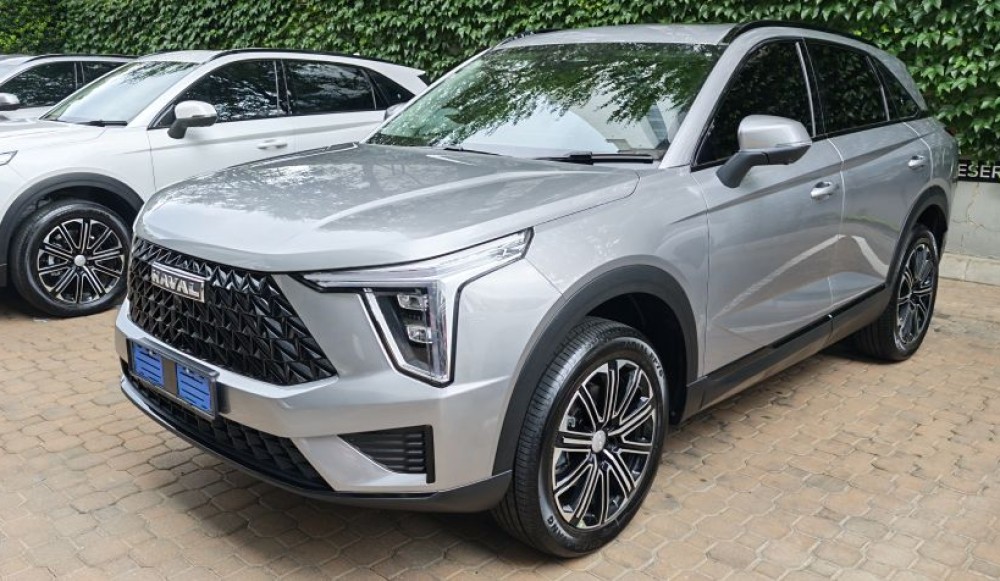
For a motorist who bought a Chery Tiggo 4 Pro or a Haval Jolion in 2022, the assumption they could trade in after three or four years and roll the equity into a new deal has collided with a market that has been flooded with newer, cheaper, better-equipped alternatives.

For pristine dealer-backed demo and pre-owned cars, bakkies and bikes click here
The data confirms what the dealers have been whispering about. An analysis of TransUnion valuation data comparing selected 2022 models over three years found the Chery Tiggo 4 Pro Elite CVT had lost 27,1% of its retail value, against 15,6% for the Toyota Corolla Cross XS and 21,7% for the Volkswagen T-Cross.
The Haval Jolion recorded retail depreciation of 25,4%, while the GWM P-Series LT shed 27%, compared with 23,3% for the Toyota Hilux Raider. On the trade-in side, the picture was starker still, with the BAIC X55 recording depreciation of 34,9% and the GWM P-Series 34,3%.
These are not catastrophic figures in isolation, but they represent a meaningful gap when measured against the settlement balances on finance agreements structured around optimistic residual assumptions.
The broader market has not been immune to the aftershocks. WesBank, one of the country’s largest vehicle finance houses, reported a 35% drop in profits before tax in its retail vehicle asset finance division for the year ended June 2026, attributing the decline to pressures in the car market. The bank noted the introduction of several new Chinese brands had become a financial risk, with used vehicle prices weakening following stronger new vehicle supply and lower-priced market entrants.
Credit impairments rose 26% to R2,604-billion, and WesBank raised a judgemental management adjustment for the inherent loss-given-default risk on used motor vehicle prices. When a lender of that scale begins adjusting its models for the collateral damage of a pricing revolution, the implications extend well beyond the balance sheets of a few unfortunate owners.
Yet the story is not one of uniform decline. The used car market for Chinese vehicles is, by several measures, flourishing. Data from an online used car platform shows pre-owned sales of Chinese vehicles surged from 6 314 units in the first four months of 2025 to 10 295 units in the same period of 2026, lifting their share of the used market from 4,9% to 7,2%.

Safe and inexpensive cars for students - click here
By mid-year, sales of used Chinese vehicles had grown 57% year on year, against 8% for the overall used market, with searches up 29% and enquiries up 83%. The average Chinese-branded used vehicle listed on the site in April 2026 had a registration year of 2024 and an odometer reading just under 29 000 kilometres, while non-Chinese pre-owned vehicles averaged a 2020 registration year with more than 72 000 kilometres.
Buyers are not turning away from these cars. They are buying them younger and with fewer kilometres, at prices that make the value proposition difficult to ignore.
The difficulty lies in the collision between that enthusiasm and the cold mechanics of depreciation. The very success of Chinese brands in the new market has undermined the residuals of the used stock.
CMH noted demand for used vehicles had been negatively affected by the continuing trend of buyers moving into cut-price new vehicle offerings and the negative new car price inflation of recent years. Why pay R300 000 for a three-year-old Tiggo 4 Pro when a new one, with a full warranty and the latest updates, can be financed for a comparable monthly instalment?
The rational consumer chooses the new car, and the used one lingers on the lot, its value drifting downward until the gap between what it is worth and what is owed becomes a problem for the person who bought it first.
The consequence is a market that is quietly sorting itself into tiers. At the top, established brands with long histories of residual strength continue to command a premium, though even they are not immune to the gravitational pull of cheaper new alternatives.
In the middle, the Chinese brands are establishing a foothold in the used market that is genuine but volatile, with values fluctuating according to the pace of new model introductions and the shifting fortunes of individual marques.
CMH was candid about this uncertainty, noting with the proliferation of products and brands increasing each quarter, it was impossible to identify all the potential long-term winners. For every Chery or Haval that builds a durable franchise, there are smaller entrants whose long-term commitment to South Africa remains an open question, and the used market prices that uncertainty accordingly.
There is a quieter transformation unfolding in the aftermarket. As these vehicles age and exit their warranty periods, owners are turning to the secondary parts market to keep them on the road. CMH’s alternative-parts supplier, MPD, which specialises in Chinese and Asian brands, reported a surge in demand as these vehicles reached the age where maintenance costs begin to matter.
This is the natural evolution of any new entrant in the automotive market: the first wave of buyers pays for the privilege of early adoption, the second wave benefits from a more competitive ecosystem and the third wave buys the car at five years old for a fraction of its original price and keeps it running with parts sourced from the independent sector.
The finance industry is adapting, albeit cautiously. The breakeven point where a car is worth more than the settlement balance sits at around month 42 of a 72-month instalment period for high-retention brands, but extends to month 60 for those with steeper depreciation curves.

Starting or expanding your business and in need of a bakkie – click here
The implication for Chinese vehicle owners is the standard three-to-four-year replacement cycle, which the industry has long encouraged, may no longer be financially viable for everyone. Some will need to hold their vehicles for five years or more before the numbers work in their favour. That shift in ownership duration will, in turn, reshape the supply of used stock, reducing the flow of nearly new vehicles and pushing buyers toward older, higher-mileage examples.
What emerges from the data is not a simple narrative of Chinese cars being a bad buy. It is something more nuanced: a market in transition, where the old certainties of brand-led residuals are being tested by a wave of new entrants whose long-term trajectory is still being written.
The owners who bought early are bearing the cost of that transition, their negative equity a form of tuition fee for a market still learning how to price these vehicles. The buyers coming in now, picking up two-year-old examples with low mileage and substantial discounts, are the beneficiaries. And the dealers and financiers in between are recalibrating their models, adjusting their assumptions, and preparing for a future in which the used car market is more competitive, more fragmented, and considerably more unpredictable than it was five years ago.
The road ahead will not be smooth. The pace of new model introductions shows no sign of slowing, and each new entrant puts further pressure on the residuals of existing stock.
The brands that survive will be those that combine competitive pricing with a credible long-term commitment to the market, building the dealer networks and parts supply chains that give used buyers confidence. For the owners currently holding the keys to a vehicle worth less than they owe, the advice is simple and uncomfortable: drive it a little longer, look after it a little better, and wait for the arithmetic to shift. The market will eventually find its level. It always does. But for some, the wait will be longer than they planned.
Colin Windell for Colin-on-Cars in association with
proudly ALL THINGS MOTORING

