





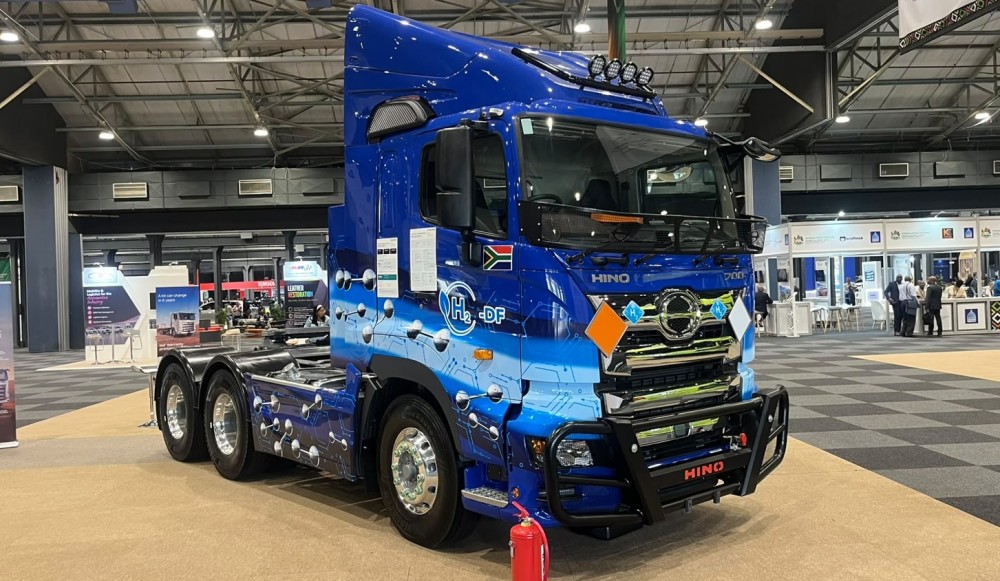
The African Continental Free Trade Area’s (AfCFTA) approval of automotive Rules of Origin earlier this year has given South Africa’s vehicle manufacturers and component suppliers a clear map. But industry stakeholders warn that without urgent action on border posts, logistics corridors and local content enforcement, the agreement risks becoming a road to nowhere.
After years of negotiation, the 39th Ordinary Session of the AU Assembly approved the automotive Rules of Origin in February 2026, setting a minimum 40% African content requirement for vehicles and components to qualify for duty-free trade under AfCFTA. An interim ceiling of 60% value of non-originating materials will apply for the first five years, giving manufacturers room to restructure supply chains while pushing them toward deeper localisation.

Looking for a safe car for a student then click here
For South Africa, which exported a record R205,4-billion worth of vehicles in 2024 despite a slight dip in unit volumes, the agreement opens up a continent of more than a billion people. Exports to Africa already reached a record R48,1-billion last year, making the region the domestic industry’s second-largest market after the European Union.
What the deal means for OEMs
In the short term, vehicle assemblers will see easier tariff access to growing markets across the continent. This supports higher production line utilisation and export revenues, building on a 2023 record of nearly 400 000 vehicle exports. The Volkswagen Polo, Ford Ranger and Toyota Hilux – already dominant on African roads – stand to gain from preferential access that levels the playing field against imports from outside the continent.
The medium-term horizon, three to five years out, could see South African plants positioning themselves as regional production hubs for specific models. Isuzu has already announced intentions to establish South Africa as a hub for African truck production, a strategy that becomes commercially logical only with clear continental demand and unhindered trade routes.
But the Department of Trade, Industry and Competition has cautioned that local content levels remain stagnant at around 40%, limiting the industry’s ability to create jobs and grow domestic suppliers. A policy review is under way to address this, with government aiming to raise local content to 60% under the Automotive Master Plan 2035.

Starting or running a small business and in need of a bakkie – click here
Supply chain realities
For component makers, AfCFTA creates demand for regionalised value chains. But they can only seize these opportunities if they meet harmonised standards, certification requirements and origin documentation.
The African Association of Automotive Manufacturers has been working closely with the AfCFTA Secretariat to disseminate the new rules, but many small and medium-sized suppliers remain uncertain about compliance requirements. Industry modelling suggests that for every job at an original equipment manufacturer, eight to 12 jobs are created in the value-chain operations supporting them – but only if those suppliers can scale across borders.
The Parliamentary Portfolio Committee on Trade, Industry and Competition heard in January that industry stakeholders are calling for a restructuring of tax and incentive systems. Independent importers and semi-knocked down kit assemblers currently bring vehicles into the country at lower costs, with limited multiplier effects for the local economy, suppressing demand for locally manufactured vehicles.
Logistics and borders: the real test

You are just one click away from finding the very best finance deal for your new car
Where the rubber meets the road – literally – is at border posts. While tariffs have been agreed, non-tariff barriers remain the single biggest threat to AfCFTA’s success.
Trucks carrying manufactured goods routinely spend days waiting at border crossings while paperwork is verified. One-stop border posts have reduced waiting times along some major corridors, but coordination between neighbouring countries remains uneven.
Digital customs systems are gaining traction. Several African countries are shifting from paper-based clearance to electronic platforms, allowing traders to submit declarations and upload documentation before shipments reach border posts. But the academic literature warns that customs administrations must be able to operate these systems, manage data securely and apply consistent procedures – requirements that demand training, administrative reform and investment.
The University of Cape Town has documented that electronic single window systems, where traders submit documents once through a single digital portal that distributes them to multiple agencies, can significantly reduce processing times and duplication. The AfCFTA Agreement explicitly encourages state parties to implement such measures.
What government must do immediately
Industry bodies and policy analysts point to six priority actions for South African authorities:
First, implement a fully functional single-window customs system and train officials to apply AfCFTA Rules of Origin reliably. Without this, compliant manufacturers will lose out to those who cut corners.
Second, scale industrial finance through the Industrial Development Corporation to de-risk localisation investments and support SME certification. The dtic has indicated it is finalising an EV battery manufacturing policy framework, aiming to replicate South Africa’s success in catalytic converter production – where the country became a global leader by leveraging its platinum reserves.
Third, lead regional efforts to harmonise automotive technical regulations and testing standards. Mutual recognition agreements between countries would reduce the cost of compliance for component makers selling across multiple markets.

Can I afford it – find out with this handy Finance Calculator
Fourth, use government procurement power. The parliamentary committee has called for stronger use of local public procurement policies, particularly in public fleet management, to support domestic vehicle manufacturers and create predictable demand.
Fifth, address logistics bottlenecks through coordinated action with SADC and COMESA on corridors, ports and anti-illicit trade enforcement. The dtic has highlighted that weak intra-continental logistics and illicit trade continue to constrain scale.
Sixth, restructure tax incentives to favour locally produced vehicles over assembled imports. Industry stakeholders have told Parliament that the current system works against domestic manufacturers.
The bottom line
AfCFTA can be a growth engine for South Africa’s automotive and supply chain sectors. The framework now provides legal certainty for manufacturers to invest in local production and trade under preferential terms.
But the agreement alone will not eliminate friction. As one industry observer put it at the Intra-African Trade Fair in 2025, the focus must be on realistic sequencing: pair market access with harmonised standards, regional industrial cooperation on components, targeted trade remedies, and selective financial instruments to de-risk greenfield investments.
The export numbers show South Africa has the capacity. In 2024, the domestic industry exported to 155 countries, with export values more than doubling for 39 of those destinations from the previous year. The question now is whether government and industry can work together to ensure the road to continental integration is paved as carefully as the agreement that opened it.
Colin Windell for Colin-on-Cars in association with
proudly ALL THINGS MOTORING

