



GWM South Africa has introduced the new-generation Haval H7 as the replacement for the current model, positioning the SUV for buyers who want a combination of off-road hardware and modern cabin technology.
The exterior adopts a boxy silhouette with a prominent stance, and GWM says the design targets drivers who value individuality and versatility. The company frames the vehicle around both urban use and outdoor travel, including camping trips and off-road trails.
The range spans six derivatives and three powertrains. The 2,0T ICE uses GWM's 4N20A turbo-petrol engine, producing 170 kW and 380 Nm and paired with a nine-speed wet dual-clutch transmission that GWM describes as a world-first in a transversely mounted application.

New and older Haval H7 models to suit your budget can be found here
The 2WD derivative reaches 100 km/h in 9,0 seconds and the 4WD in 8,6 seconds, both with a 200 km/h top speed. The 1,5T HEV combines a dedicated hybrid engine and a two-speed DHT gearbox for 182 kW and 540 Nm, reaching 100 km/h in 8,6 seconds with a claimed 5,3 l/100 km (NEDC) at minimum state of charge.
The 1,5T PHEV is offered in two states of tune: the 2WD derivative produces 240 kW and 540 Nm with an 8,4-second 0–100 km/h time and 130 km of NEDC electric range, while the Hi4 4WD derivative produces 280 kW and 670 Nm with a 5,8-second 0–100 km/h time and 115 km of NEDC electric range. Both PHEV derivatives support V2L external discharge of up to 6 kW.
A chance to drive all three power derivatives on some fine Cape roads showed clearly a ‘growing up’ progression from GWM. The new design fashion of chunky squared shape with clearly defined edges appeals to me but the jury may still be out with some new car prospects.
Either way, GWM has vastly improved the noise insulation in the cabin and, with the marginally shorter wheelbase, upped the handling and road feel of the H7 – to say nothing of providing really comofrtable seating inside.

Your dream car – make it happen with the best finance deal
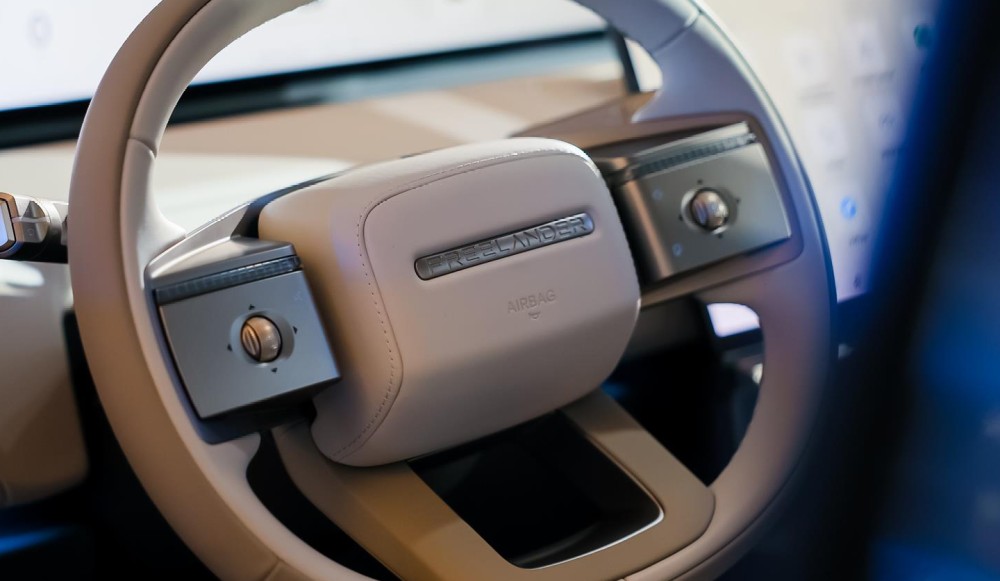
Inside, the cabin centres on a 12,3-inch digital instrument cluster and a 15,6-inch central touchscreen with anti-glare and anti-fingerprint coating. A 9-inch head-up display projects speed, navigation and driver-assistance information into the driver's line of sight, reducing the need to look down at the instrument panel.
Voice control, activated by a steering-wheel button or a wake word, covers 17 functions including climate, windows, the panoramic camera and ambient lighting. A 50 W wireless charger and a 10-speaker sound system are fitted, the latter configured as four tweeters, four woofers, a centre speaker and a subwoofer. A panoramic sunroof is standard across the range and blocks 90,5% of UV radiation.
Front seats with three-level heating and ventilation are standard on every derivative, and the driver's seat gains power and memory adjustment on the HI4 Ultra Luxury grade. GWM lists 43 storage points throughout the cabin. The boot holds 586 litres with the rear seats in place and 1 404 litres with them folded flat. A 220 V outlet in the boot is rated at 400 W on ICE and HEV derivatives and up to 2,2 kW on PHEV models, allowing owners to run small appliances.
The 4WD derivatives use two different systems. The 2,0T ICE 4WD employs a BorgWarner Haldex sixth-generation electronically controlled 4WD system that redistributes torque between the front and rear axles in as little as 200 milliseconds. The PHEV derivative uses GWM's Hi4 system, which drives the rear axle through a dedicated 150 kW motor and achieves a claimed 0–100 km/h time of 5,8 seconds.
Both 4WD derivatives share an electronically controlled jaw-type rear differential lock that delivers full torque to both rear wheels and disengages automatically above 40 km/h. On the ICE 4WD derivative, an Off-Road Cruise function manages throttle and braking to hold a set speed between 7 km/h and 15 km/h on technical terrain.
GWM quotes a 25-degree approach angle, a 32-degree departure angle, 210 mm of unladen ground clearance and a 580 mm wading depth, with 255/60 R19 tyres and a full-size spare as standard. The 2,0T ICE 4WD derivative offers up to nine drive modes: Eco, Normal, Sport, Snow, Mud, Sand, Grass/Gravel, Rough Road and Auto.
Although the launch drive did not include any dong-diving activities it did give a good indication of the overall capability of the H7 – for me the pick of the bunch being the HEV that delivers excellent instant power and torque, progressing steadily as and when required with plenty in reserve for overtaking.
The HEV is presently available only as a 4x2 but, perhaps, GWM needs to consider adding the 4x4 version to the mix.

Good insurance is vital – click here to find out more
On the road all three variants feel solid and planted with minimal body roll when pressed through a corner and the large glass areas, especially behind the ‘B’ pillar mean all-round visibility is excellent.
Safety equipment includes six crash bags with side curtain bags, a body structure using high-strength steel, and a 13-sensor suite supporting a Level 2 driver-assistance system. The package covers automatic emergency braking that can bring the vehicle to a full stop from 50 km/h to avoid stationary obstacles, full-speed adaptive cruise control with lane centering, lane-keeping and departure warnings, blind-spot monitoring, rear cross-traffic alert and braking, and a 540-degree camera system with a transparent-chassis view.
All derivatives come with two intelligent keys, keyless entry, push-button start and central door locking, with an electronic engine immobilizer on the ICE range.
Pricing starts at R 554 900 for the 2,0T Super Luxury 4x2 9DCT and rises to R 794 900 for the 1,5T PHEV Ultra Luxury 4x4 DHT. The full range is priced as follows: 2,0T Super Luxury 4x2 9DCT at R 554 900, 2,0T Ultra Luxury 4x2 9DCT at R 594 900, 2,0T Ultra Luxury 4x4 9DCT at R 654 900, 1,5T HEV Super Luxury 4x2 DHT at R 624 900, 1,5T PHEV Super Luxury 4x2 DHT at R 734 900 and 1,5T PHEV Ultra Luxury 4x4 DHT at R 794 900. Five exterior colours are offered: Hamilton White, Night Black, Cloud Stream Grey, Matte Grey and Emerald Green, with a single black interior trim across the range.
Ownership support includes a 7-year/200 000 km warranty, an 8-year/150 000 km battery warranty on hybrid models, 7-year/unlimited km roadside assistance and a 7-year/75 000 km service plan. Service intervals are set at every 15 000 km or 12 months.
Colin Windell for Colin-on-Cars in association with
proudly ALL THINGS MOTORING

