

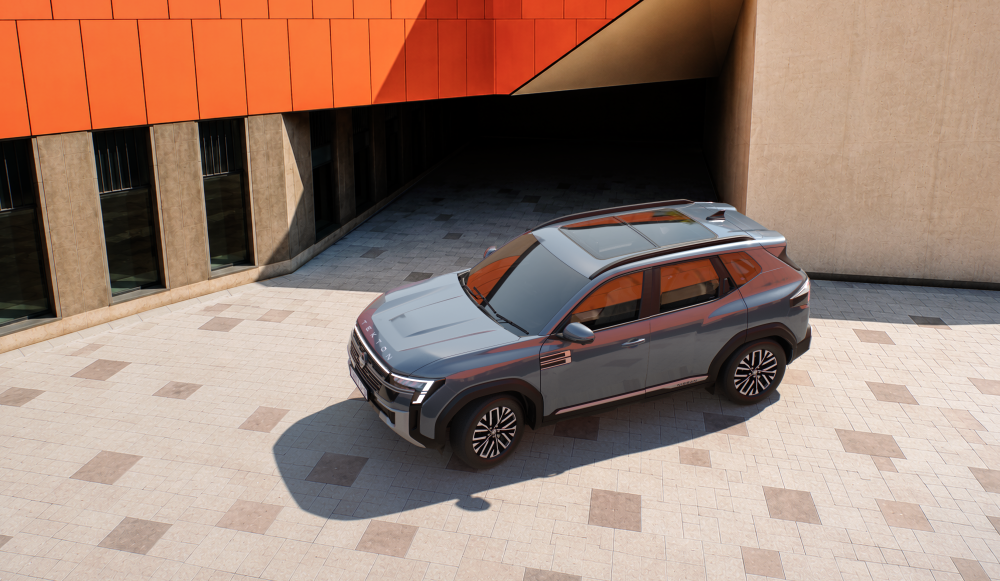
Let’s be honest – the compact SUV scene is packed. Everyone and their neighbour have a tall hatchback with plastic cladding and a vaguely sporty roofline. So, when a new one arrives, it had better bring something fresh. Enter the Citroën Basalt, a coupé-styled crossover that doesn’t try to be everything to everyone. Instead, it focuses on a few things done properly: design, comfort and value.
Citroën has never been a brand to follow the herd. Think Traction Avant. Think DS. Even the quirky C4 Cactus marched to its own beat. The Basalt continues that tradition, but here’s the twist – it wasn’t dreamed up for Parisian boulevards. It was made for places like South Africa, where roads can be rough and buyers want something that stands out without breaking the bank.

Citroen Basalt is on our books so jump in and take a good look - click here
Launched here in March 2026, the Basalt sits above the C3 and Aircross as the third and final member of Citroën’s C-Cubed family. You get two derivatives: the Plus at R354 900 and the Max at R369 900. Both are assembled at Stellantis’ plant in Tiruvallur, India, and come to us fully imported. The ownership deal is solid from the start: a 5-year/100 000 km warranty and a 4-year/60 000 km service plan with 15?000 km intervals. That’s reassuring.
From the front, the Basalt looks familiar – it shares the C3 Aircross face with split LED headlamps, Y-shaped daytime lights and a confident grille. But walk around to the back, and things get interesting. That roofline drops sharply into a fastback tail, giving it a proper coupé silhouette. The 3D rear light clusters add flair, and overall, it stands apart from the usual box-on-wheels look of most B-segment SUVs.
Size-wise: 4 352 mm long, 1 765 mm wide, 1 593 mm tall, with a 2 651 mm wheelbase. Ground clearance is 180 mm – enough for suburban speed bumps and the odd dirt road. Sixteen-inch alloys finish the look. It’s not a big car, but it carries itself nicely.
Related Content: First Drive - Citroen Basalt

Can I afford it – find out with this handy Finance Calculator
Open the door and the cabin feels refreshingly different. A layered dashboard in grey, black and red breaks away from the sea of monochrome interiors at this price. The soft-touch instrument panel runs across the dash, and storage bins sit where you actually need them. The 10,0-inch Citroën Connect touchscreen floats in the centre, with wireless Android Auto and Apple CarPlay. A 7,0-inch digital cluster handles the driver’s readouts cleanly.
Climate control is automatic, and there are rear air vents – a thoughtful touch for our hot summers. Proxi-Sense keyless entry with push-button start, cruise control with a speed limiter, and electrically adjustable folding mirrors come standard. The Max adds a leather-trimmed steering wheel, reverse-view camera, auto-dimming rear-view mirror and two extra tweeters for the sound system.
The five-seat layout is genuinely roomy for this size of car. Front seats are height-adjustable, and the steering column tilts – easy to find a comfy position. Rear legroom is good for the segment. Tall passengers might find their head brushing the sloping roofline, but for most people, day-to-day use is fine. The boot holds 470 litres – competitive and usable.
Build quality feels consistent. Hard plastics are everywhere, but they fit well and feel solid. No rattles or squeaks on our test car – a small win at this price level.
Here’s where the Basalt wins you over. Under the bonnet is the familiar 1,2-litre turbo three-cylinder petrol engine, making 81 kW and 205 Nm of torque from 1 750 r/min. It drives the front wheels through a six-speed automatic. The pairing works well – the engine pulls with real purpose in the mid-range, so overtaking and merging onto highways feels relaxed, not stressful.
Being a three-cylinder, there’s a gentle thrum at idle and a faint vibration through the steering wheel and seat when stationary. Nothing bothersome. Once the turbo wakes up at highway speeds, the drivetrain settles into a calm, composed rhythm. The automatic can sometimes snatch a shift if it gets caught between ratios, but it rarely upsets the drive. Claimed fuel use is 6,3 l/100 km – achievable with relaxed driving.

Great insurance is a safety net you really need – click here to find out more
Where the Basalt really shines is the ride. Citroën tunes suspension for comfort, and the Basalt gets Progressive Hydraulic Cushions – hydraulic stops on compression and rebound that absorb bumps progressively rather than banging to a halt. The result: a ride that glides over broken tar and patchy surfaces. Potholes that would crash through cheaper setups are met with a quiet, composed thud. Small bumps just disappear.
Yes, there’s body roll in corners – this isn’t a hot hatch. But through long, sweeping bends, it holds its line faithfully. Straight-line stability at highway speeds feels secure. The steering is light and accurate, making city driving easy, and 180 mm of ground clearance adds confidence on rougher roads.
When she drove the car Mrs W opined it was one of the nicer of my test cars she had driven, commenting the view from the driver seat was ideal, it was easy to park and handled easily in traffic – her only lament being the lack of height adjustment for the safety belt.
The Basalt carries a four-star Bharat NCAP rating, aligned with Global NCAP and the #SaferCarsForAfrica standards. Six crash bags come standard across the range, with Electronic Stability Control, hill-hold assist, anti-lock braking with Electronic Brakeforce Distribution, tyre pressure monitoring, rear parking sensors and ISOFIX child-seat anchors. That’s a thorough package for the money.
The Basalt knows what it is. It doesn’t pretend to have the gadgets of a much more expensive car, and it doesn’t chase sharp handling at the expense of comfort. What it does offer – distinctive looks, a genuinely cushy ride, a roomy and well-finished cabin, and a strong ownership deal – it delivers with quiet confidence.
At R354?900 for the Plus and R369?900 for the Max, the Basalt sits as a thoughtful alternative in a B-SUV segment where volume and price pressure often rule. For South Africans who tackle imperfect roads daily, need practical family space and want something that doesn’t blend into the parking lot, this French curve ball makes sense.
Colin Windell for Colin-on-Cars in association with
proudly ALL THINGS MOTORING

