




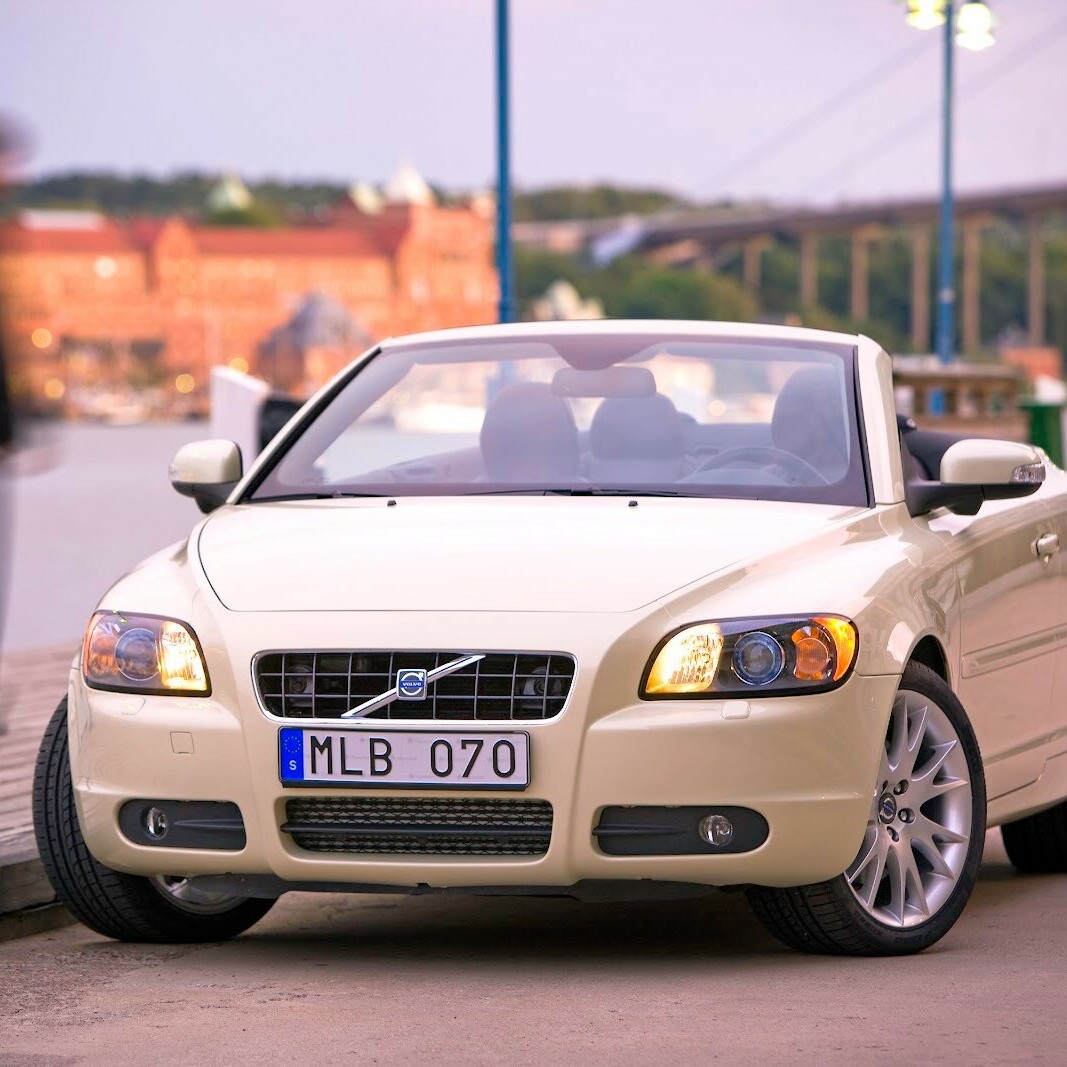
As both generations reach milestone anniversaries in 2026, the C70 stands out as Volvo’s most design-led two-door. A Swedish grand tourer that paired elegant styling with charismatic five-cylinder performance, and quietly rewrote the brand’s image.
- The Volvo C70 celebrates a major milestone in 2026, marking 30 years since the first generation and 20 years since the second. Across both generations, the C70 remains one of the brand’s most emotionally led two-door vehicles—one that challenged expectations of what a Volvo could look like and feel like behind the wheel.
- The C70 blended elegant design with charismatic five-cylinder performance, evolving from a sporty coupe and convertible into a refined, all-season grand tourer with a folding Pininfarina-designed hardtop.
- Today, the C70 is fondly regarded by enthusiasts and collectors, its spirit of performance and emotion living on in Volvo’s modern lineup.
2026 is a milestone year for the Volvo C70, the Swedish marque’s two-door grand tourer lineup that was first introduced in late 1996. With the first generation turning 30 years old, and the second generation celebrating its 20th anniversary, the C70’s legacy can be viewed as a defining chapter in the marque’s history, beginning as a bold design departure and ending as the most technically ambitious convertible Volvo ever produced.
Revealed at the Paris Motor Show in 1996, the first-generation C70 was offered with a range of five-cylinder engines, providing the performance one would expect from a Volvo sports car. The most potent motor offered was the turbocharged 2.3-litre engine, which developed a heady 180 kW and 330 N.m of torque, making it one of the most powerful front-wheel-drive vehicles at the time.
Based on the P80 platform (which underpinned numerous Volvos, including the S70 and V70), the C70 was offered with two transmission choices, namely a four-speed automatic or a five-speed manual. A year later, the C70 convertible was introduced, marking the first Volvo drop-top since the little-known P1900 debuted in the 1950s.
Unlike its predecessor, the 780, the svelte C70 was one of the Volvos that pushed the brand forward design-wise, and was penned by the legendary Peter Horbury, who jokingly told the press that with the C70, Volvo “threw away the box but kept the toy inside,” referring to the brand’s link to boxier, sturdy-looking exterior design. Horbury wanted to create something that was an emotional project, a car that didn’t need to be functional.
Reviewing the C70 at its 1996 launch, the late Top Gear presenter and media personality Quentin Wilson said the “C70 goes as well as it looks,” praising its dynamism and surprising wild side, noting it’s a Volvo with attitude. “It’s poised, it’s accurate, and feels very crisp indeed.” Small wonder, then, that when it came time to choose a car for Val Kilmer’s character, Simon Templar, for the 1997 film The Saint, it was the C70 that got the part—a homage to the P1800 driven by Sir Roger Moore in the earlier TV series of the same name.
The first-generation C70 coupe and convertible ran all the way until 2005, with the coupe being discontinued earlier, in 2002. In total, 76,809 units were produced, making it one of the rarer Volvos of the 21st century. Due to its longer production run, the C70 coupe is actually the more exclusive model, with 26,036 coupes sold (compared to 46,785 convertibles).
Rather than replacing the coupe and convertible separately, Volvo took a different approach for the second-generation model, rolling both body styles into a single, more sophisticated offering. Introduced in 2006, the latest version marked a clear shift in positioning, moving away from outright sportiness and toward refinement, usability, and year-round grand touring capability.
The second-generation C70 became the only Volvo ever produced with a fully automatic, three-piece folding hardtop roof, a system developed by Webasto and built by Italian design house, Pininfarina. The roof could raise or lower in less than 30 seconds, while still providing nearly 200 litres of boot space with the top stowed away. This innovation transformed the C70 into a true all-season convertible, offering coupe-like security and comfort when closed, and open-air appeal when lowered.
Like its predecessor, the C70 was offered with several five-cylinder engines (a four-cylinder diesel was available in some markets), with the top-spec T5 delivering 186 kW and 370 N.m of torque to the front wheels. While powerful and engaging, the second-generation C70 was positioned as more of a luxurious GT car, with space for four passengers, their luggage, and the added confidence of a solid roof.
A facelift was introduced in 2010 and brought the C70 stylistically in line with the rest of the range, including the then-new second-generation S60 and the first XC60. The second-generation C70 proved even more popular than the original, with 89,074 units sold between 2006 and 2013. Today, both generations are cherished by Volvo aficionados, valued for their elegant design, distinctive five-cylinder powerplants, and the role they played in reshaping the perceptions of the brand.
“The Volvo C70 holds a unique place in our heritage. It was one of the first Volvos that didn’t just meet expectations, it surprised people with its poise, performance and design,” commented Grant Locke, Managing Director of Volvo Car South Africa. “That willingness to push the boundaries is something that defines us still. As we celebrate the milestone anniversaries of both C70 generations, we’re also looking forward, championing vehicles that deliver the same sense of engagement and excitement, shaped for a more sustainable future."

